Labyrinthian, narrow and authentic, the backstreets to any old town are an obsession for any traveller looking to view a city from a different perspective. Vilnius, Lithuania’s storied capital, is a veritable paradise for these little, interesting offshoots. Its backstreets fill out entire chapters of its history, creating a patchwork mosaic of the cultures and traditions that make the city so unique.
Whether you’re looking to explore them at your own pace or have a specific itinerary planned – here are some backstreets you should definitely save for your trip.
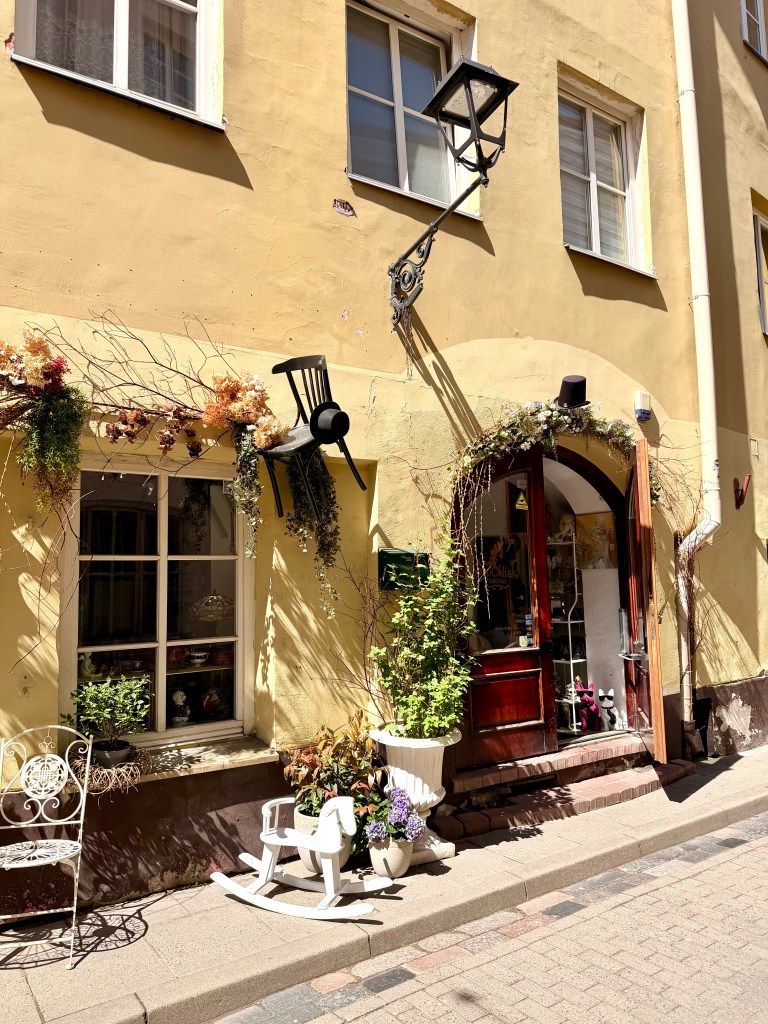
The Glass Quarter;
Even in a city filled with hidden treasures, few can hope to compete with The Glass Quarter’s resplendent beauty. Spanning the space of three glass factories that occupied the area, these backstreets have been revitalised to their former glory with independent shops, cafes and a touch of artistic flair.
Once a vibrant and bustling Jewish community, Vilnius’ Glass Quarter was the beating heart of some of the region’s most important industries. During this time, the area laid claim to having the country’s first Goldsmiths guild (founded in 1495) and also became its first glass manufacturer (starting in 1547). Both have monuments and plaques dedicated to them throughout the district.
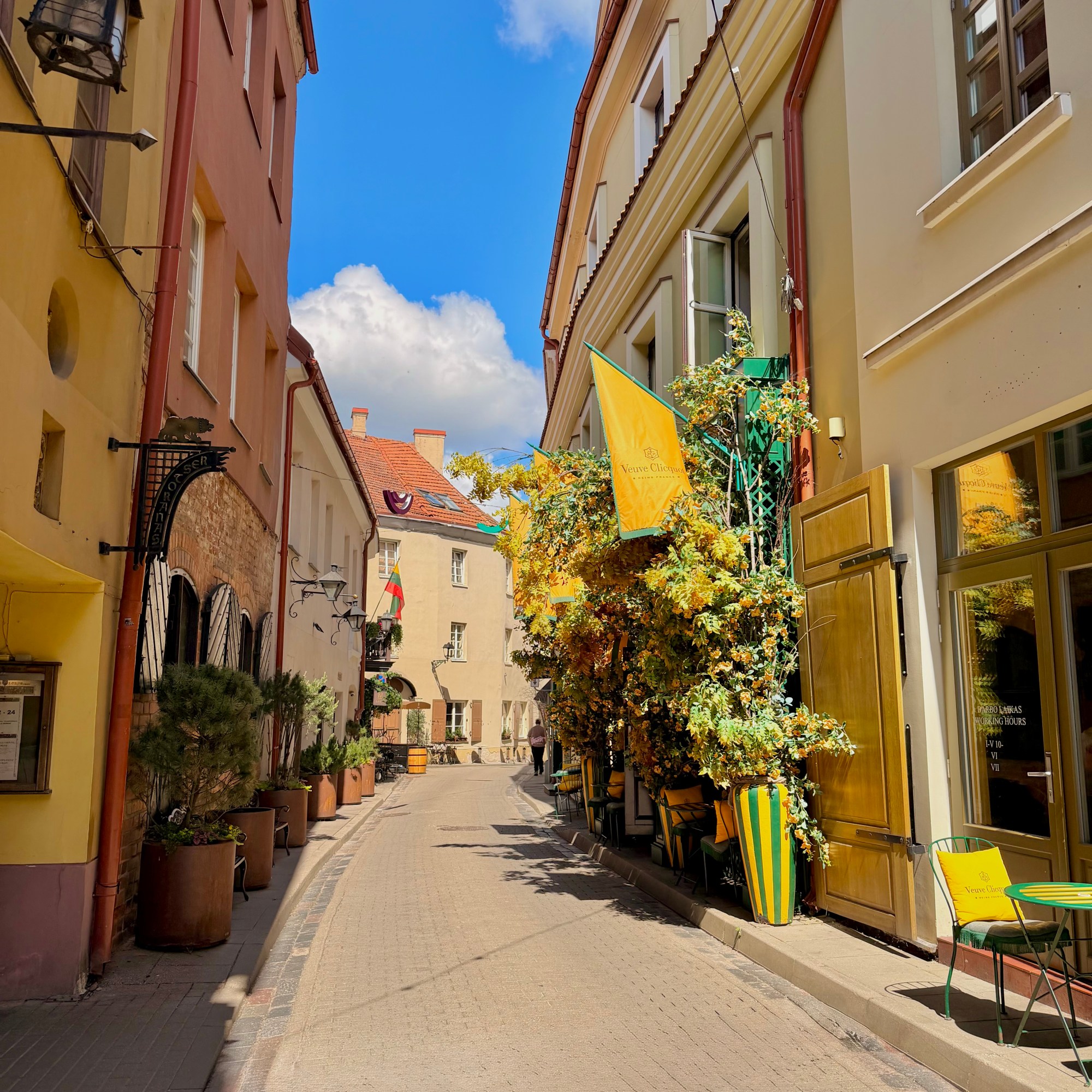

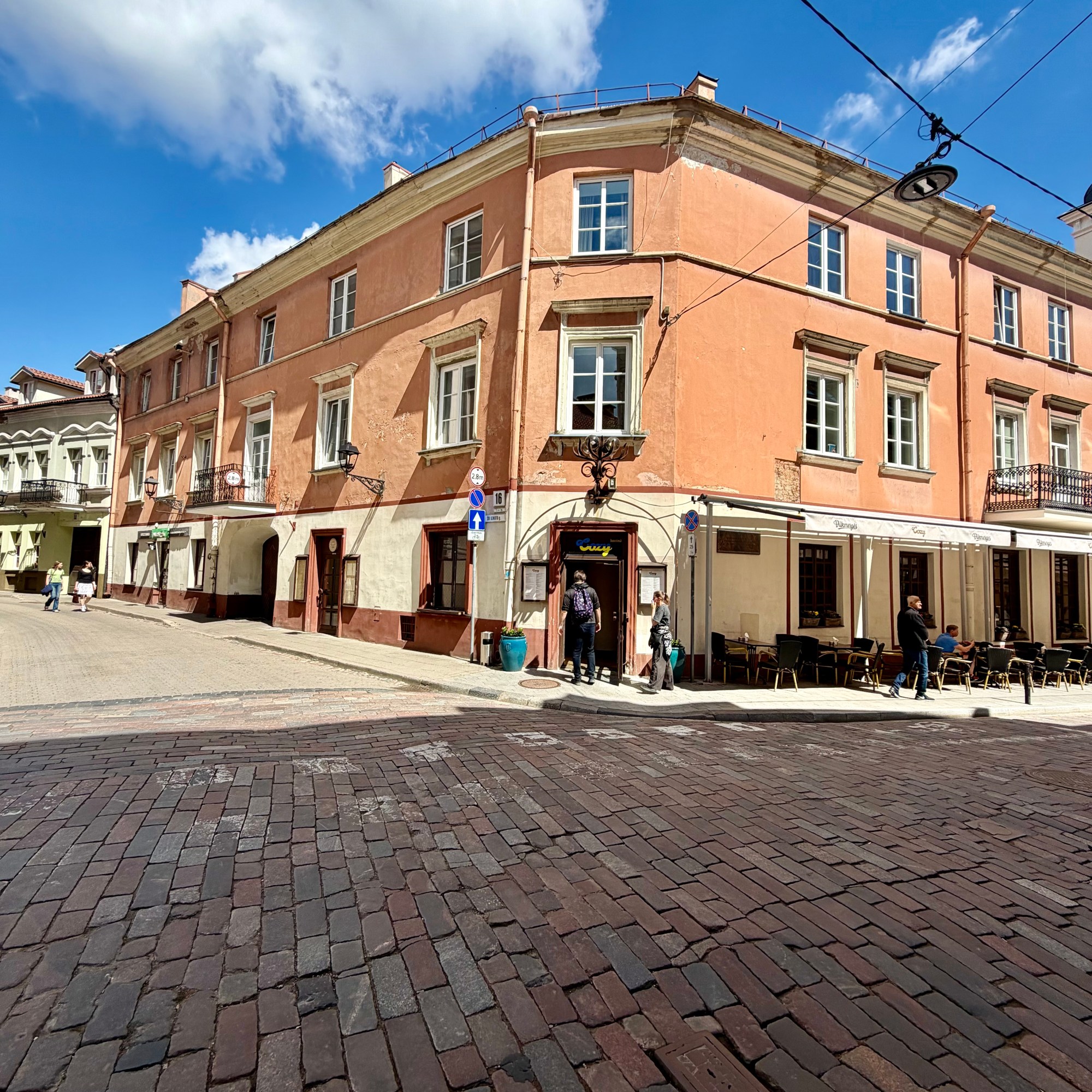
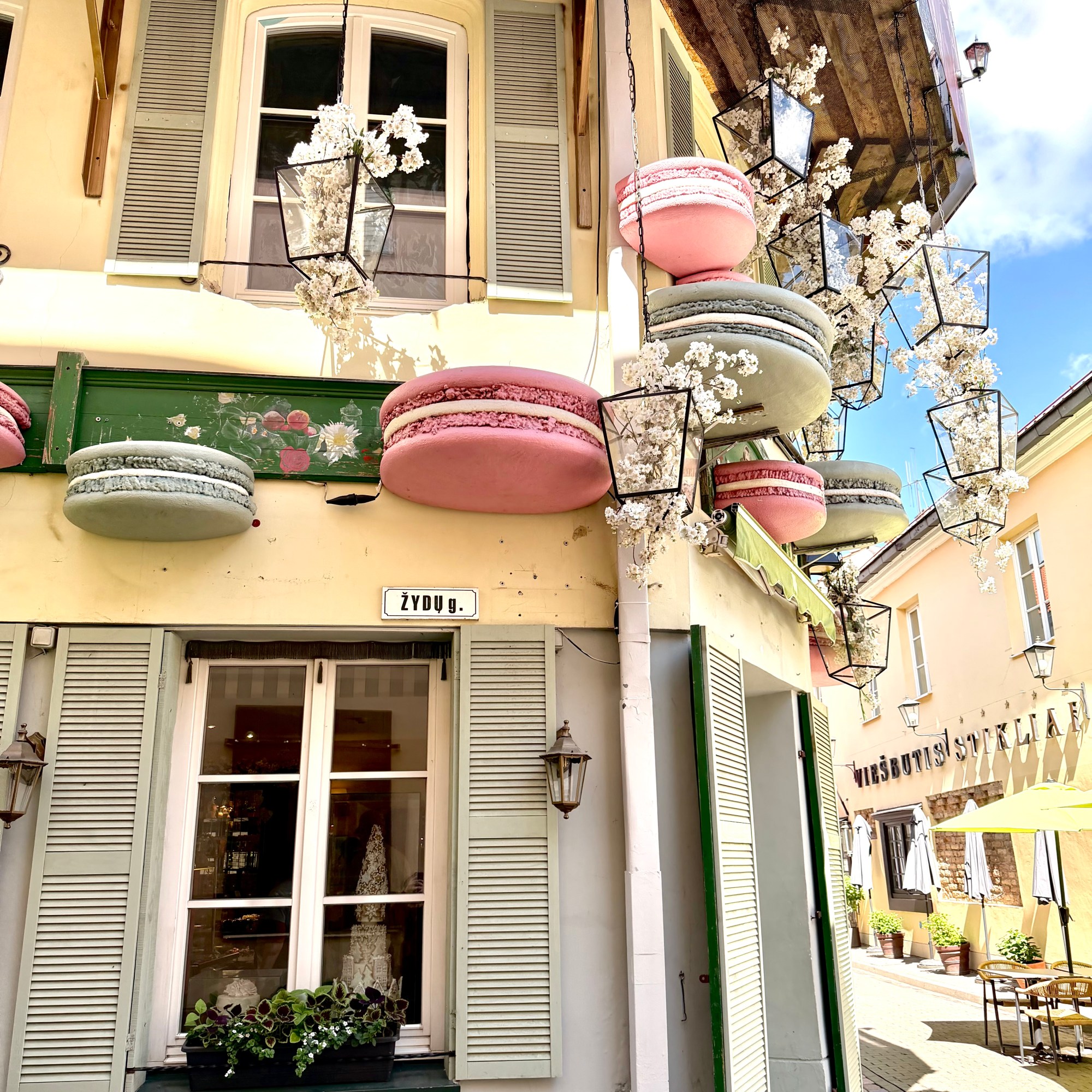
This thriving scene all changed with the outbreak of WWII and the advancement of the Nazis into Lithuania with their ensuing ghetto policies. Over the past twenty years, however, a lot of work has gone into giving this area a new lease of life. Its bohemian beauty now seeks to celebrate the area’s culture as well as its new artistic vision.
Bernardinu Gatve/Teapot Street;
Along Pilies Gatve, Vilnius’ main pedestrian street, is where you’ll find another picturesque backstreet gem colloquially known as Teapot Street. Although its actual name is Bernardinu Gatve, it has gained its moniker thanks to the infamous vintage teapot street art indented into the side of one of its walls.
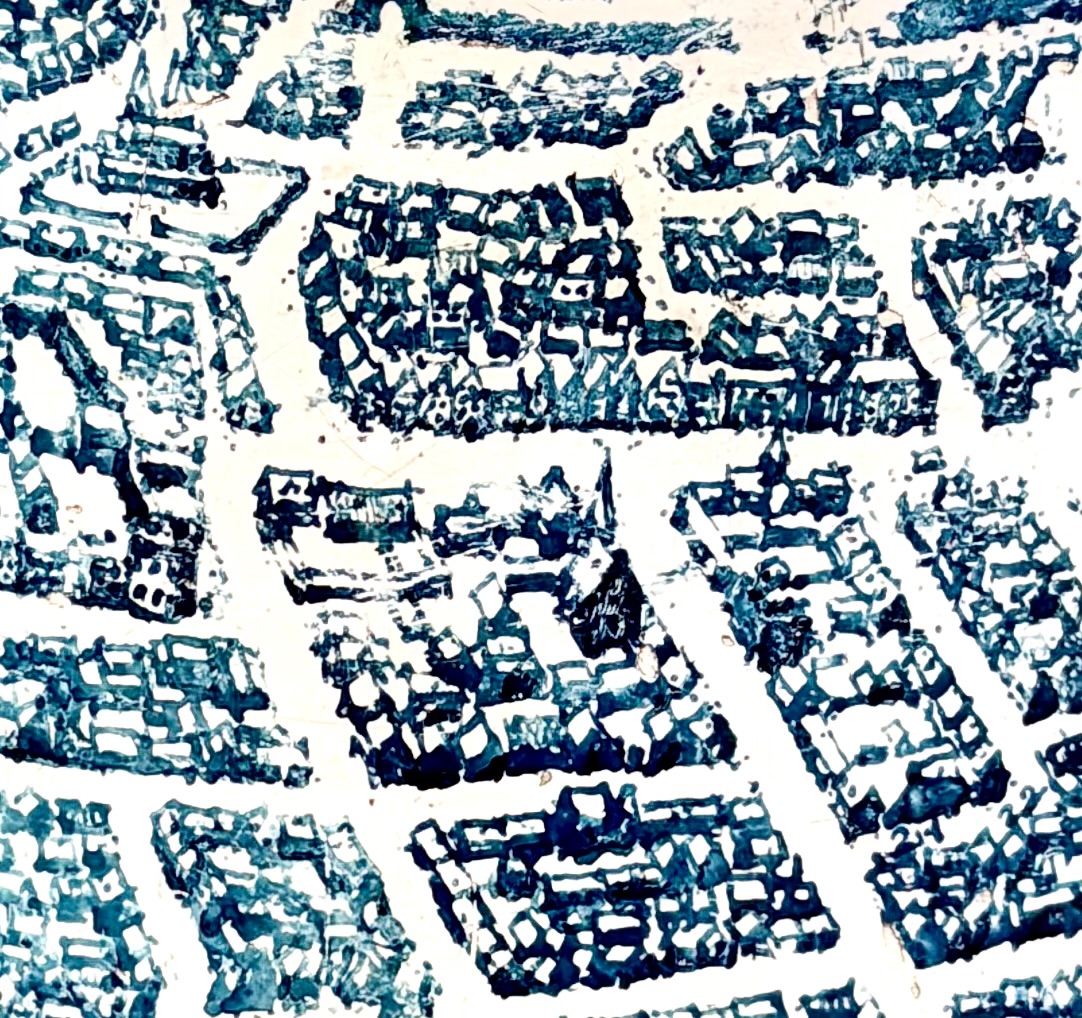
Originally an advertisement for an adjoining tearoom, this piece of street art has gained a life of its own as a bit of an Instagram darling in part due to the teapot’s unique designs, including one that features an old map of Vilnius.
Venturing beyond this display, and the narrow passageway opens towards something distinctly more palatial. Ornate and with a baroque façade, the Shakespeare Hotel stands out against the city’s timeworn elegance, making it worthy of at least a little attention.
St. Kazimiero Gatve;
Also hidden behind the main shopping street is St. Kazimiero Gatve, which sits quiet and crumbling. Characterised by a medieval gatehouse, the silence of its cobblestoned interior is deafening.

Along this street, the only noise you’ll hear are the echoing voices of happy shoppers brought with the light breeze.
Ligonines Gatve;
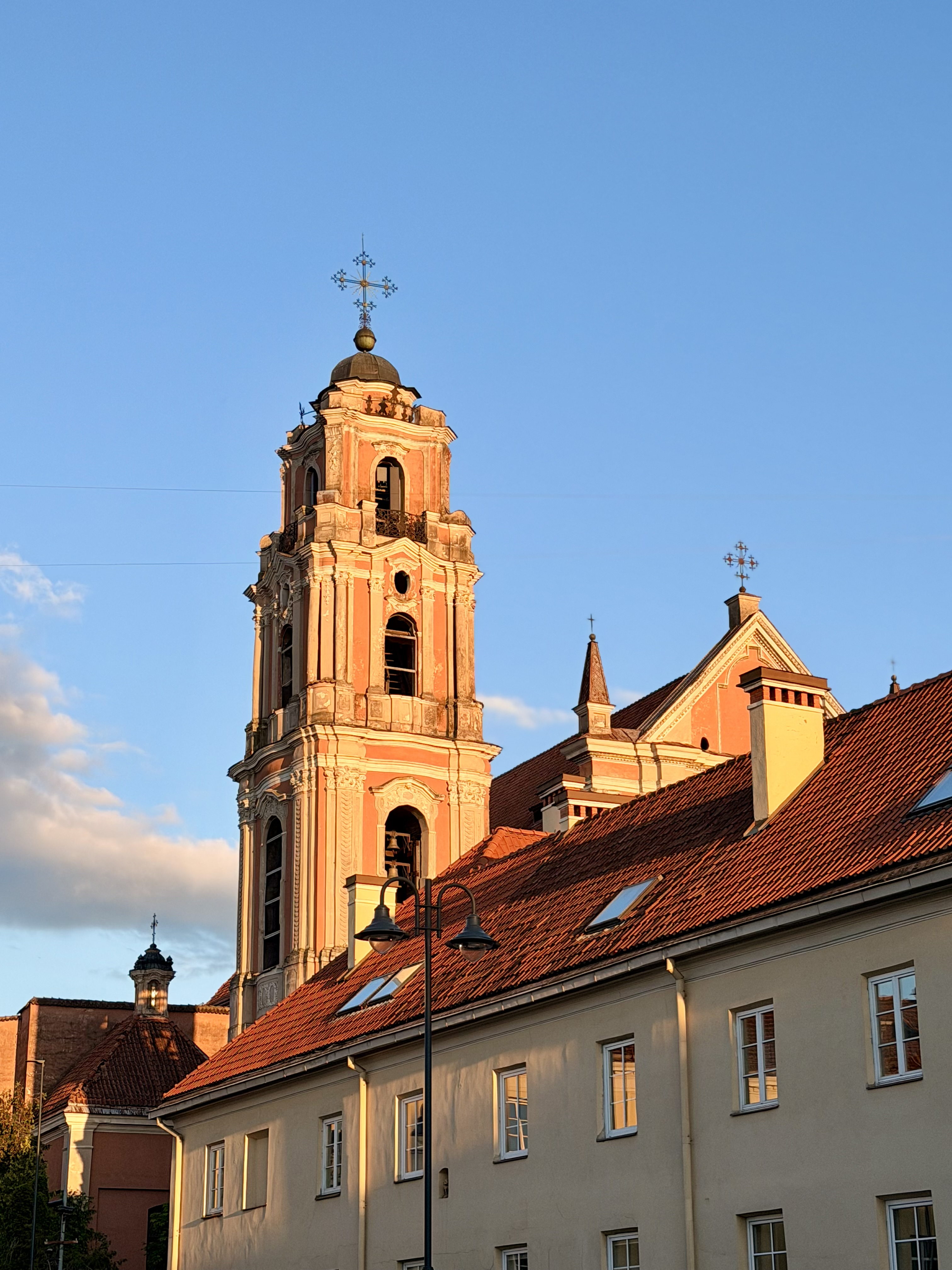
Set under the watchful bell tower of the nearby Church of All Saints, Ligonines Gatve is a sun-kissed ray of sunshine on the edge of the former Jewish district. Marked with florists, bakeries and high-class restaurants, this street rewards those who venture beyond the ordinary with its own style of faded chic. At dusk, the scene becomes something special as the tinges of yellow, green and light pink on the houses light up like something out of a fairytale.


Šv. Dvasios Gatve;
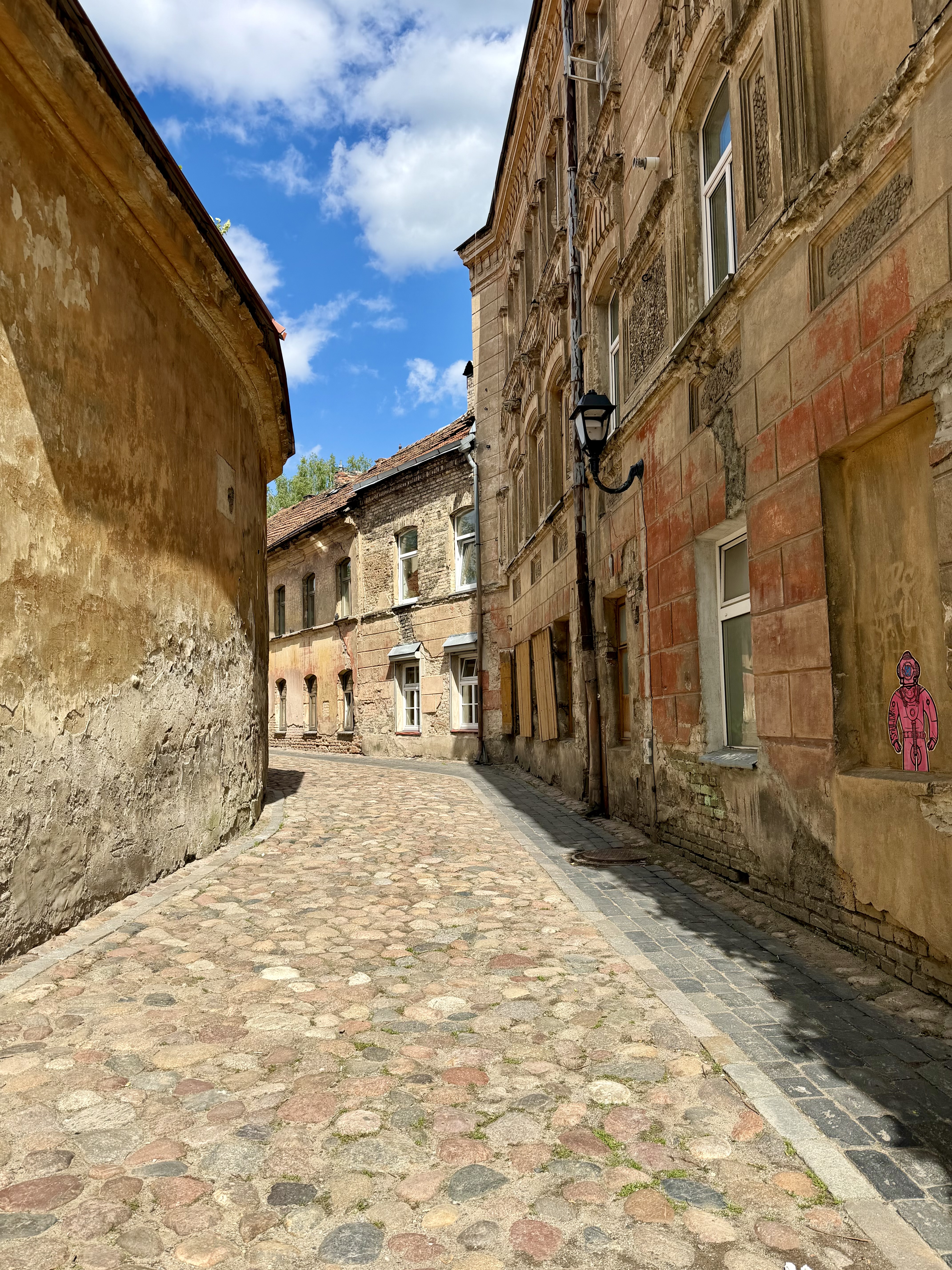
Weathered façades, exposed brick and aged plaster. Šv. Dvasios Gatve, also known as the Holy Spirit Street, perfectly blends Vilnius’ style of faded exceptionalism. Nestled behind a music shop near to the Gates of Dawn, it is easily missed. But those who do find it are instantly immersed into a rugged and real slice of the capital’s history.
For more content on my recent trip to Lithuania and the Baltics – check out the travel blog’s Insta page


Leave a Reply