There is something special about what the American frontier evokes. It was once a lawless part of the new world that saw its land make way for gun-toting cowboys, prospectors searching for their chance at making a fortune, and the average citizen just looking to survive the harsh realities of everyday life on the unforgiving, subaked plains. Adventure shouts from its very pores – and it’s a call that few can choose to ignore.
As the settlers moved slowly west in search of cheap land, economic opportunities and their beliefs in ‘manifest destiny’, they left behind irrefutable legacies. After all, there are few today who couldn’t recount Billy the Kid’s exploits in Dodge City or understand the horrors that occurred at The Alamo. In Arizona too, tales from the scorched land regale infamous Tombstone gunfights and the White Dove of the Desert. The Grand Canyon state, however, has plenty more frontier stories to offer, and a ruined bell tower rising above the Santa Cruz River Valley weaves a tale of woe and hardship.

More than 300 years ago, the area which is now known as southwestern Arizona was once part of the far-flung reaches of the Spanish Empire. To keep their control on a region so vast and often hostile, their approach to influencing the local populations revolved around setting up missions and military posts together to spread religion and put up a show of force. In 1691, these Spanish missions eventually made their way to the small Pima village of Tumacacori.
Although originally settled by the Jesuits, the main structure that provides the bulk of the National Historic Park actually dates to the early 19th-century, when the Franciscans took control. The atmosphere it invites, however, is no less impressive. Wander through the hand-carved wooden doors of the Cocóspera-style adobe visitors centre, and it isn’t long before the mission comes into view. Despite the echoes of modernity rushing with the freeway nearby, there is nevertheless a sense of solitude and isolation to the place. The mission, however cliché this may seem, is frozen in time, and an air of hasty abandonment hangs thick over the monument.

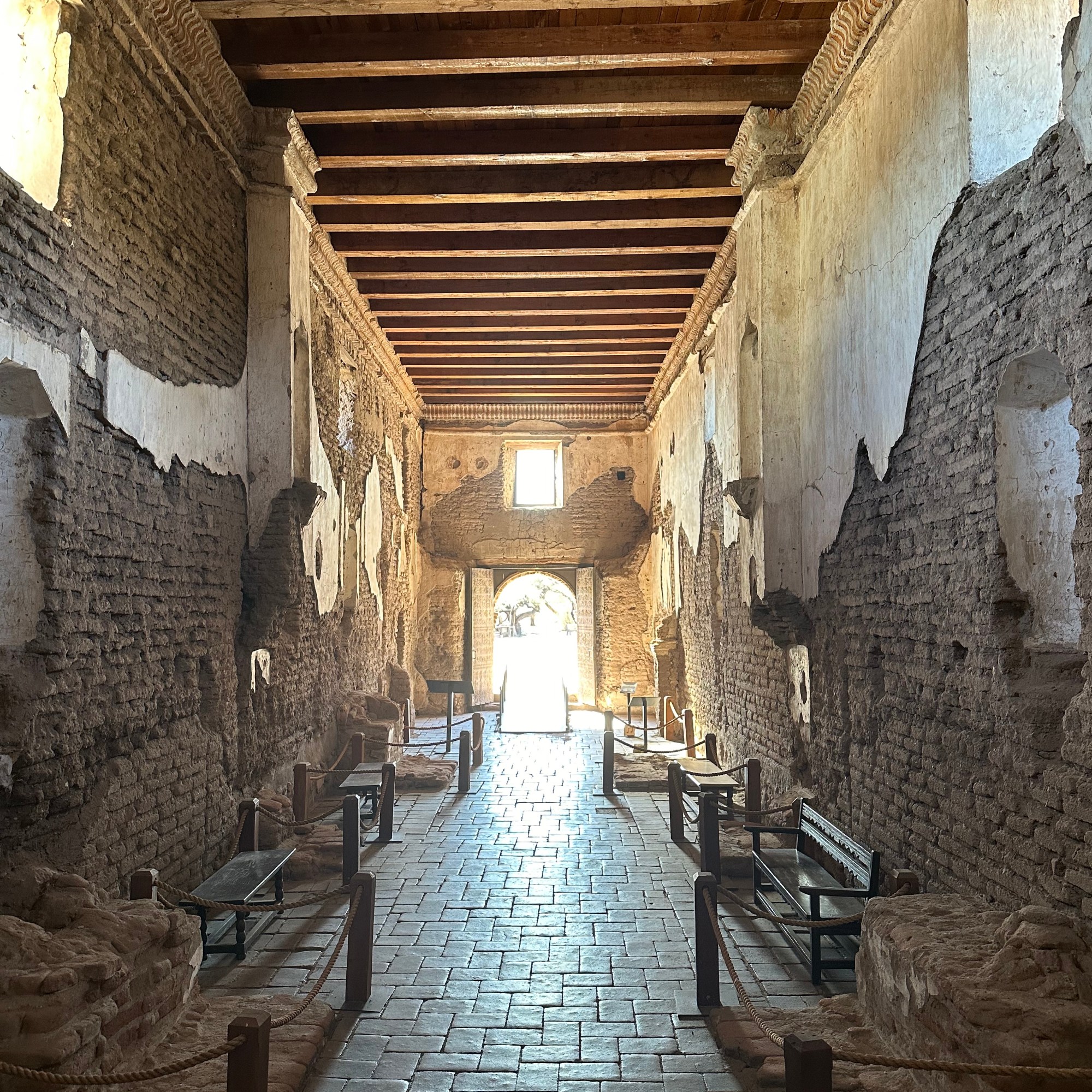
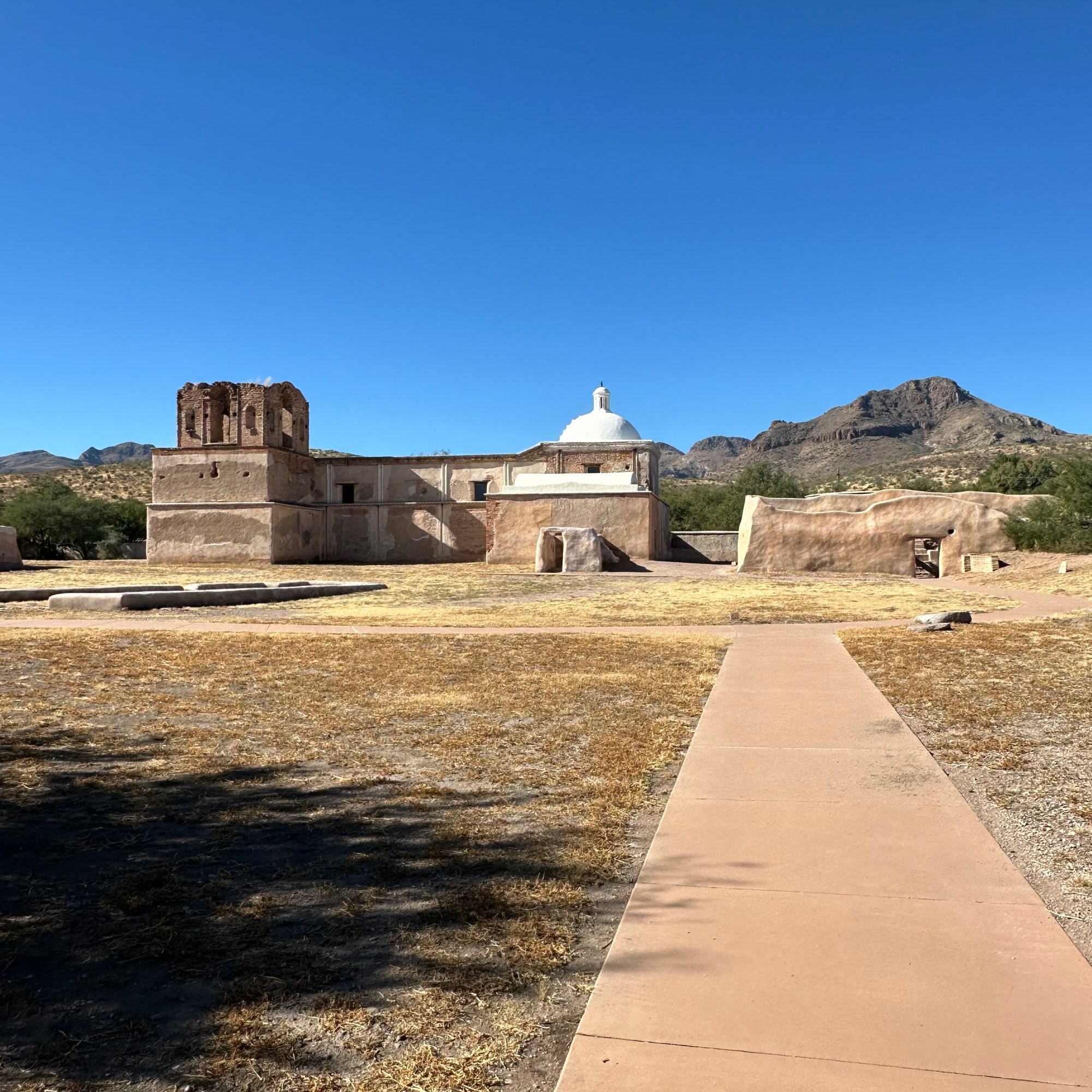
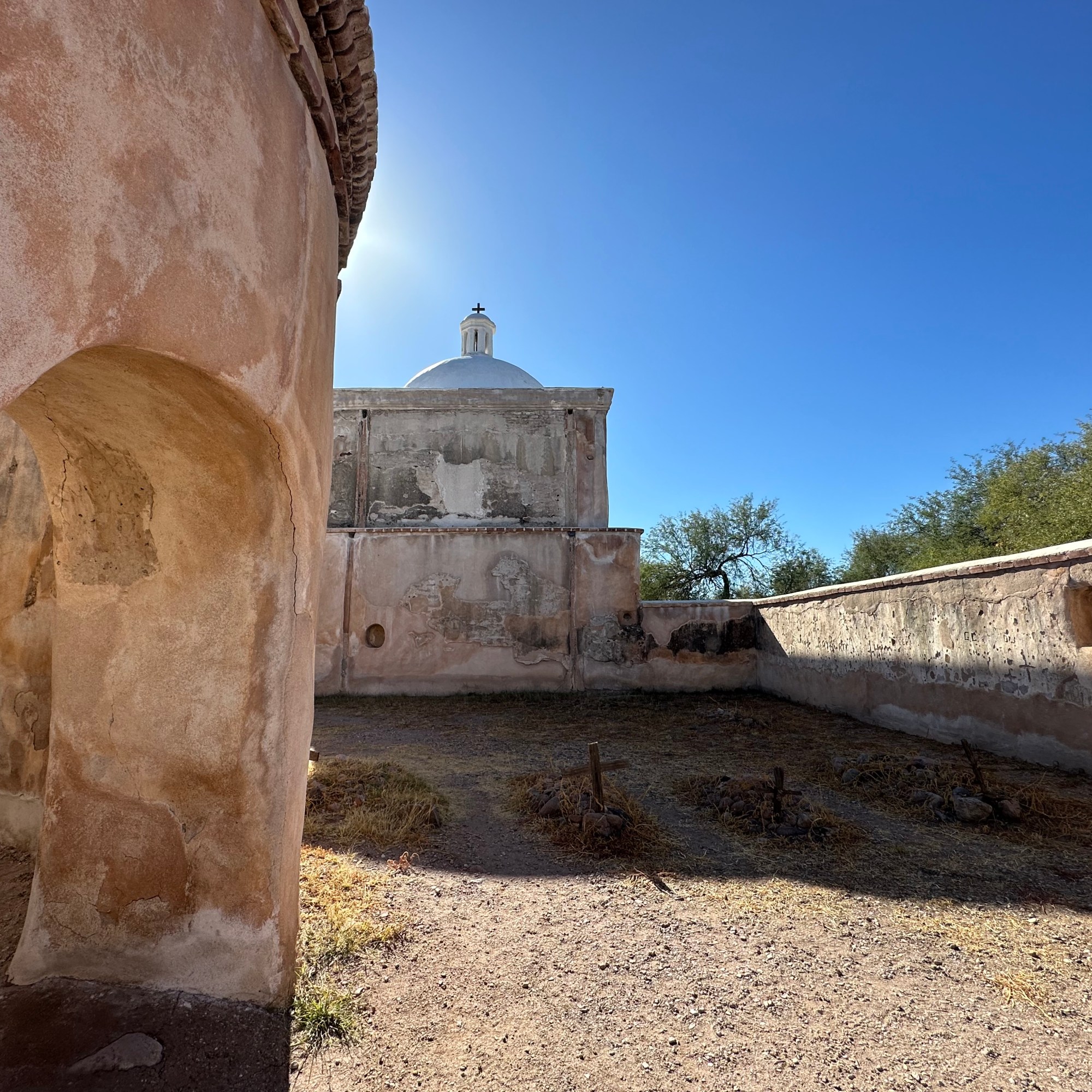
From the outside, it’s obvious that time has taken its toll. The bell tower, now half collapsed, supports small sprigs of weeds in places where bricks once encased a call to prayer. The inside, too, has felt a weathering, with the plastered walls showing its fair share of the exposed brick underneath. However, the highly flower-patterned door, still easily visible, is a nod to its former importance in the region.
Like so many places from the early days of American discovery, the mission at Tumacacori became a victim of its harsh and hostile environment on the frontier. After raid upon raid by the neighbouring Apache tribes, keeping the parish and its parishioners safe became an impossible task, and by 1848, the last who called the mission their home left for San Xavier del Bac. Besides the church and the visitor’s centre, a small yet informative museum recounts the constant conflicts between missionaries and the warring Apache. These exhibits also include a section on Cochise, an infamous Apache leader whose negotiations brought a period of peace to the region, albeit only for a short time.
For more content on my recent trips – check out the travel blog’s Insta page


Leave a comment