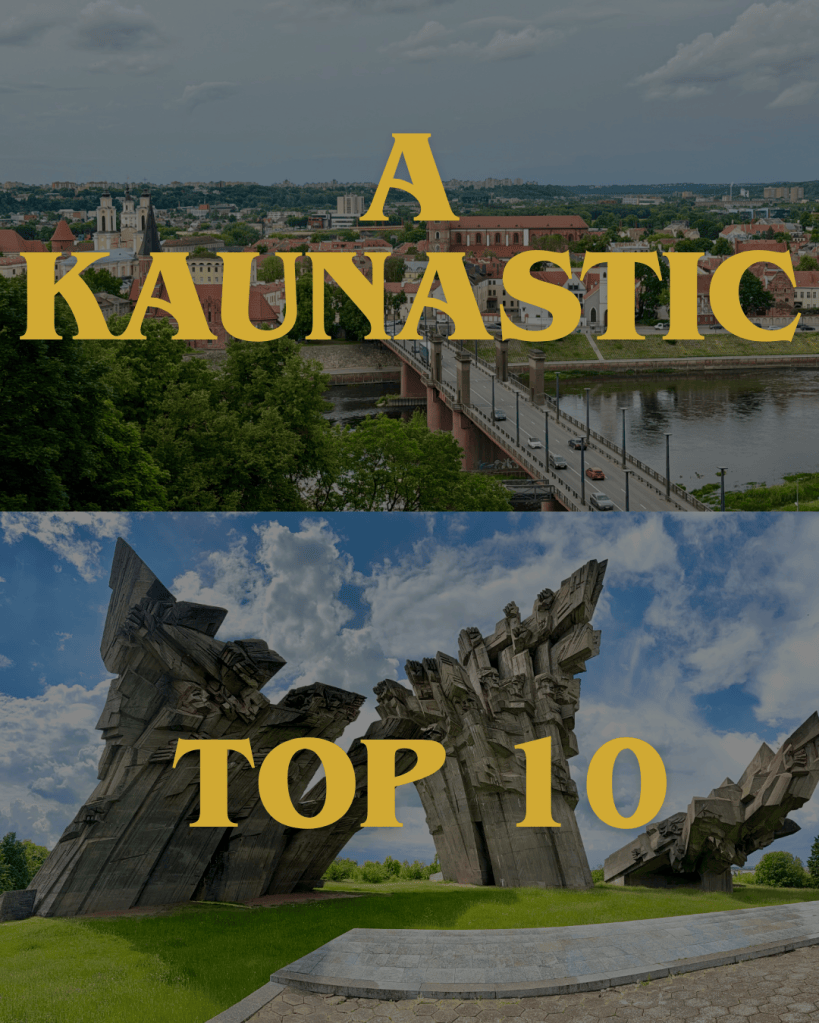
Bringing with it a totally different vibe from the capital, Kaunas has developed a reputation as Lithuania’s ‘cool city’. Set on the confluence of the Nemunas and Neris rivers, the city has survived Crusaders, Russians and Nazis, becoming the birthplace for the nation’s national resurgence and creating a cultural melting pot.
Filled to the brim with museums, cosy independent cafes, and a newly inspired street art mural on every corner, the city has so much to discover. So, to help those looking to plan a trip to the country’s degalinė (gas station – a playful term for the city’s location), I devised this top 10 to help people plan their perfect trip.
(1) Admire the Views from Aleksotas
When exploring a new city, gaining some perspective can be a good thing. In Kaunas, there’s no better place to do this from than Aleksotas Hill. Towering above the Nemunas River, exactly opposite the historic old town, it provides some of the best vantage points of the entire city down below.
On the one side, you’ll see the turret of the castle and the spires of several churches that hug the outline of the city’s mediaeval origins. On the other, the slick, curved lines and silvery-grey hues of 20th-century architecture offer a glimpse at Kaunas’ optimistic heritage.
TOP TIP: For the best views, make sure to arrive on the top of the hill by dusk, when buildings, old and new alike, are bathed in a glorious Baltic sunset.
(2) Ride the Historic Funiculars
Trundling up the hills of Žaliakalnis and Aleksotas, Kaunas’ funiculars have been serving the city since the 1930s. In their nearly ninty years of service, they’ve remained largely unchanged, and a ride will transport you back in time with its rickety wooden seats and vintage equipment. Just be sure to have 1€ handy (as that is how much each trip will cost).
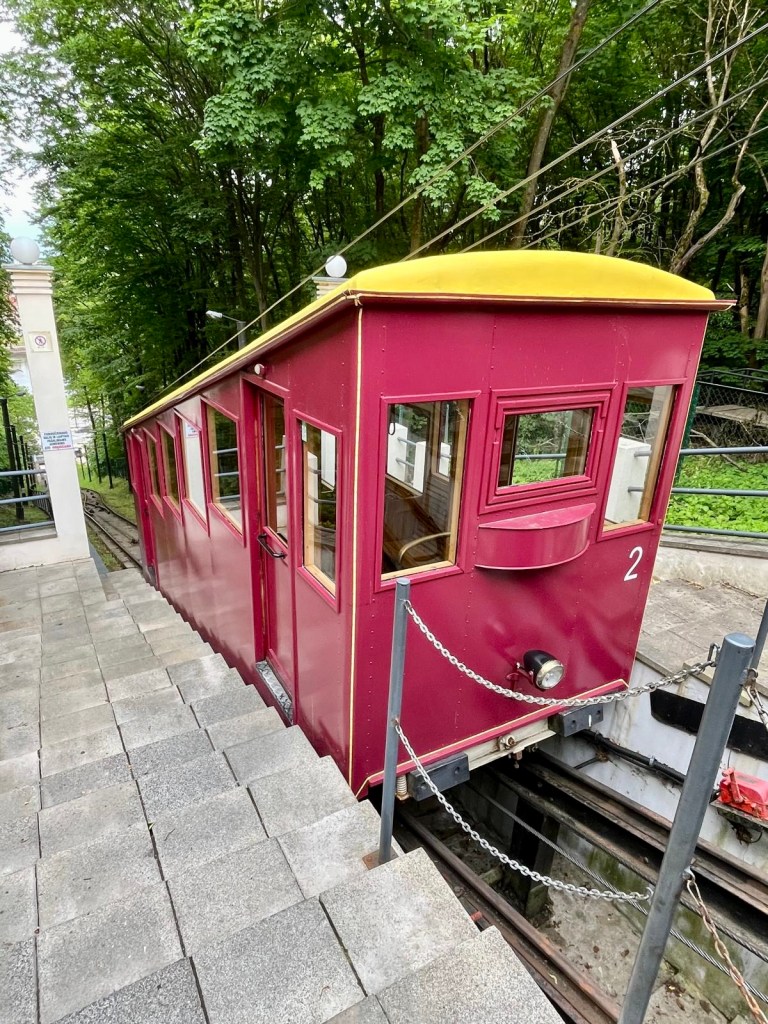
TOP TIP: Use the Žaliakalnis funicular to reach Kaunas’ interwar masterpiece, the Christ’s Resurrection Basilica.
(3) Learn from the Horrors of the IX Fort
There are few places on Earth that are truly shocking – the IX Fort is one of them. Over the course of a three-year period, the fort became the site of some of the most brutal atrocities committed by the Nazis outside of the Polish concentration camps when 50,000 Jews, Lithuanians and Poles were systematically exterminated and buried onsite.
Walking amidst this tragic history is a sobering yet rewarding experience. Your breath can’t help but clench, as prison cells and torture rooms alike showcase the sheer brutality the Nazis displayed in their aims of conquering and extermination. The cold, even on a warm day, echoes the inescapable solemnity that still wraps around the heart of the fort.
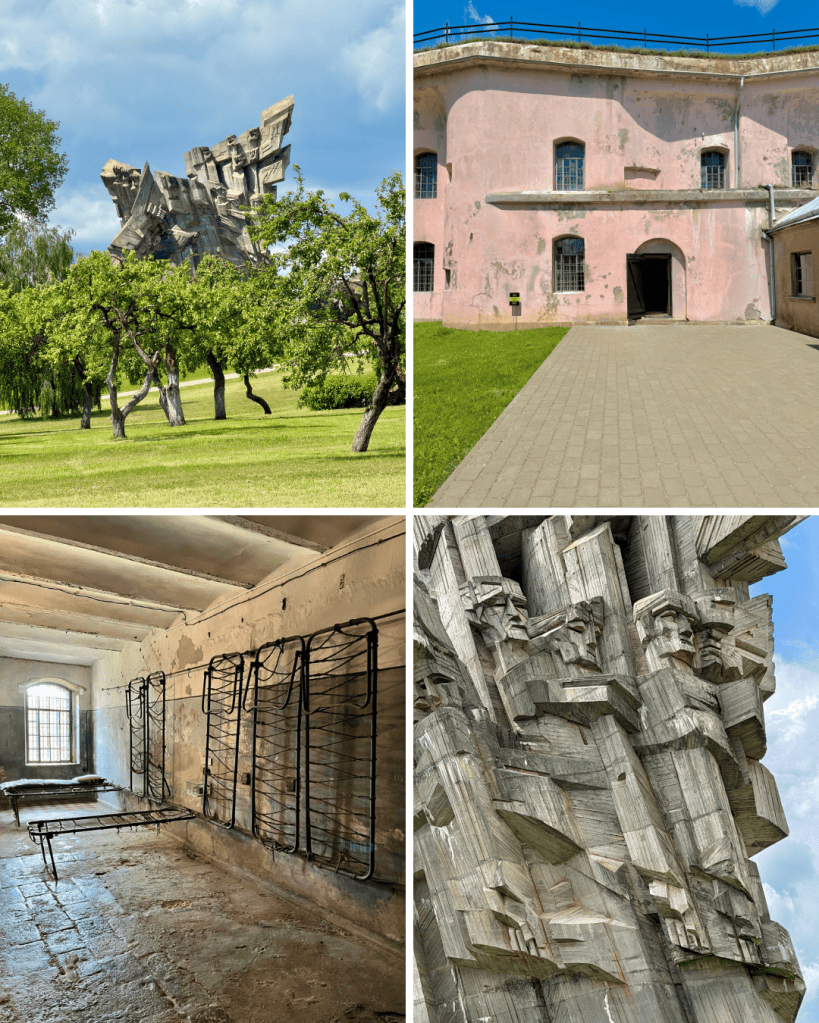
Also on site is the unmissable Monument to Commemorate Victims of Nazism. A brutal carving crafted from cold stone, it’s a three-part monument filled with struggling faces, arms and bodies all hoping to rise against the violence and oppression shown by the Nazis.
TOP TIP: The IX Fort is located 8 km outside of the city and can be easily reached by bus (no. 57) or through a Bolt ride share.
(4) Hunt the City for Street Art
Since becoming Lithuania’s temporary capital at the start of the 20th century, Kaunas has slowly transformed itself into a hotbed of Lithuanian culture and artistic fervour. As a result, the city is the number one location in the country for street art. Like, seriously, the city is filled from street corner to street corner in amazingly imaginative outdoor murals – and new ones are created every single year!
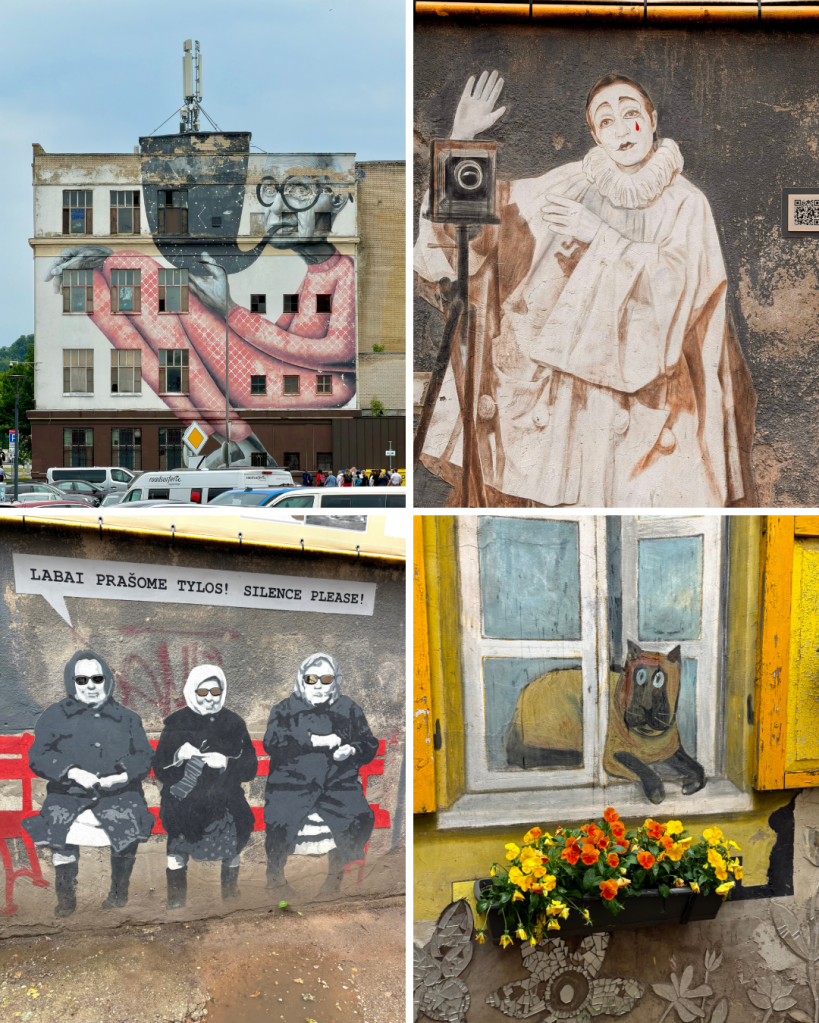
With 72 different examples to choose from, picking a favourite is difficult. However, few can hope to match the size and scale of Maciunas’ ‘Wise Old Man’. A 440 sq metre mural hanging onto an entire wall of an abandoned shoe factory, he models barefoot, smoking a pipe filled with dreams of the universe.
TOP TIP: To find your way around every important mural and piece of street art, consider procuring a free street art map from either the Town Hall or from the Tourist Information Office.
(5) Explore Kaunas’ Old Town
Albeit small, Kaunas’ old town is a treasure trove of architectural and historical wonders. Congregating on the confluence of the Nemunas and Neris rivers, its locality brought with it a hive of activity, and it saw periods of economic prosperity throughout the Medieaval era.
A quiet, peaceable area today, start your explorations at the castle’s last surviving tower and ramparts. Hardened by years of crusader battle fare, a statue of Vytis, a freedom warrior, still attempts to guard the castle ruins. Not far away is the stunning House of Perkunas, a fantastic example of Lithuania’s 15th-century red-brick architecture.
(6) Dance with Devilry at the Devils’ Museum
Satan, Lucifer, Mara, Ahriman, and even the Japanese Tengu, the devil has found itself wearing many forms throughout human history. He’s often seen as a tempter or an adversary, but whether human or monster, his supreme figure has captured our imaginations in a way so profound that it persists even within our modern society.
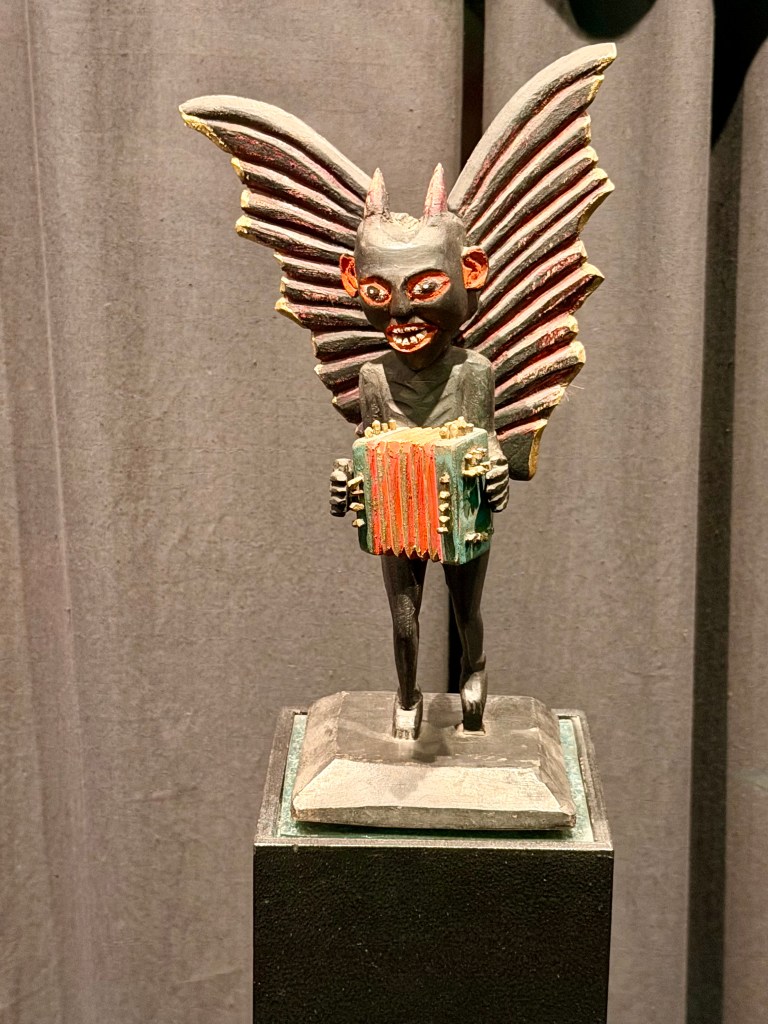
In celebration of this mysterious being, Antanas Žmuidzinavičius spent his life collecting trinkets and figurines relating to the Devil. In return, his efforts were rewarded with the creation of the Devils’ Museum.
The only museum of its kind in the world, this truly unique display houses more than 3000 individual pieces, all of which bare the iconography of humanity’s most beguiling trickster.
(7) Blur Art and Music at the M. K. Ciurlionius Museum
The artist and composer, M.K. Ciurlionius, had a unique vision of the world that permiated every facet of his creative output. Born with synesthesia and heavily influenced by the natural rhythms of nature and Lithuanian tradition, his works blur the lines where art ends and music begins, creating a one-of-a-kind style that is etherial, fantastical and completely otherworldly.
Built in celebration of this short-lived national hero’s achievements, the M.K. Ciurlionius museum is the largest cultural space in the country. Housing his gargantuan collection, visitors can expect to be taken on a journey filled with vivid harmonies and colours.
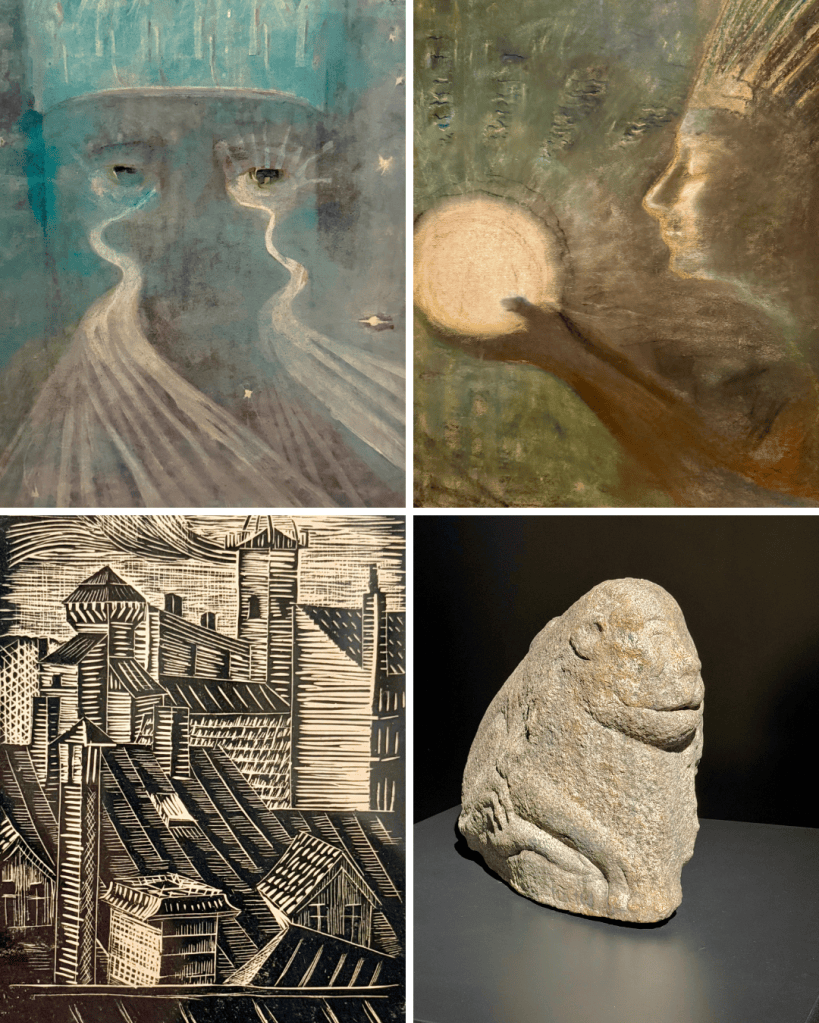
HIGHLY RECOMMENDED: The M.K. Ciurlionius Museum isn’t the only cultural space dedicated to the artist/composer; the Ciurlionius Memorial Museum is located in the beautiful spa town of Druskiniskai.
(8) Try Out Kaunas’ Foodie Scene
Much like its larger brother, Vilnius, Kaunas has a wealth of options when it comes to its foodie scene. From cafeteria classics, Lithuanian staples and more adventurous cultural imports, the city makes sure that you’ll never leave on an empty stomach.
WHY NOT TRY? Kaunas’ cafe scene is second-to-none. For a more traditional experience, head on over to the MBAKERY.
(9) Walk Europe’s Longest Pedestrianised Street
Shops, cafes, restaurants, and so much more. At 1 mile in length, Laisves Aleja, also known as Freedom Avenue, is officially the longest pedestrianised street in Eastern Europe. It’s an undeniably pretty boulevard and well worth walking the full length to get a sense of this forward-facing city.
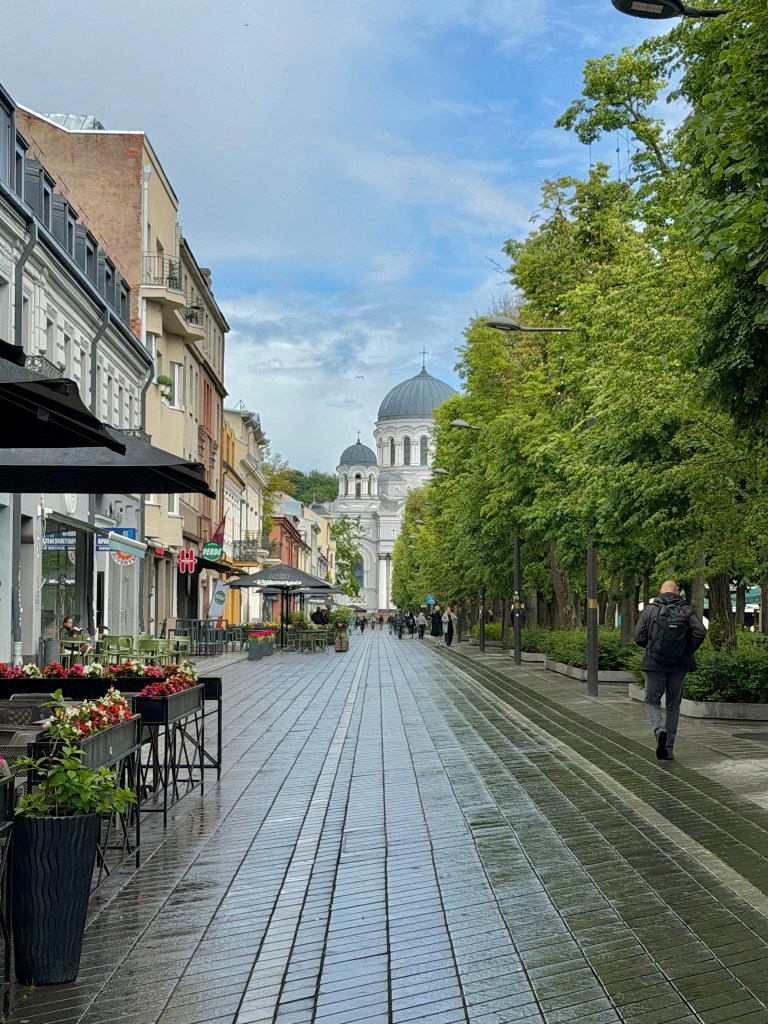
HIGHLY RECOMMENDED: Visit the spectacular 19th-century Church of St Michael the Archangel at the end of the long street.
(10) Investigate the City’s Architecture of Optimism
From gigantic churches towering over the city to a small fountain set in the middle of the city’s longest pedestrianised street, Kaunas’ Architecture of Optimism can be found nearly everywhere across the city. Popularised during the 1920s and 30s, its stylings were born from a newly found hope after the country finally gained its independence after centuries under Russian occupation.
For more content on my recent trips – check out the travel blog’s Insta page


Leave a Reply